Azure Backup Policy
What it is
A backup policy is the reusable rule that says when Azure Backup takes recovery points (schedule) and how long it keeps them (retention). The supported policy model depends on the workload and vault type.
Why it exists
Teams need protection to happen predictably instead of relying on someone remembering a manual backup. A policy encodes a requirement such as “back up daily; retain selected daily, weekly, monthly, and yearly recovery points.” Retention affects both recovery options and storage cost.
Key ideas
- Schedule: how often Azure Backup creates recovery points. Capabilities differ across workload types; do not assume every workload supports the same frequency.
- Retention: how long selected recovery points remain available. A policy can preserve daily, weekly, monthly, or yearly points where supported.
- Assignment: one policy can protect multiple compatible resources. A VM backup policy, for example, can protect multiple Azure VMs.
- Change management: changing a policy can change future protection and retention behavior. Understand the existing recovery points and the workload-specific effect before editing a production policy.
- Recovery targets: schedule and retention alone do not define recovery time. Test how long a real restore takes and whether the restored application is usable.
Northwind example
Northwind gives its ordering VMs a policy that takes scheduled backups and keeps a longer monthly recovery point for its audit needs. Before accepting the policy, Priya asks two separate questions: “How much history can we recover?” (retention) and “How quickly can we return the service?” (restore testing and recovery time). A daily backup schedule does not promise a one-hour restoration.
How it fits (diagram)
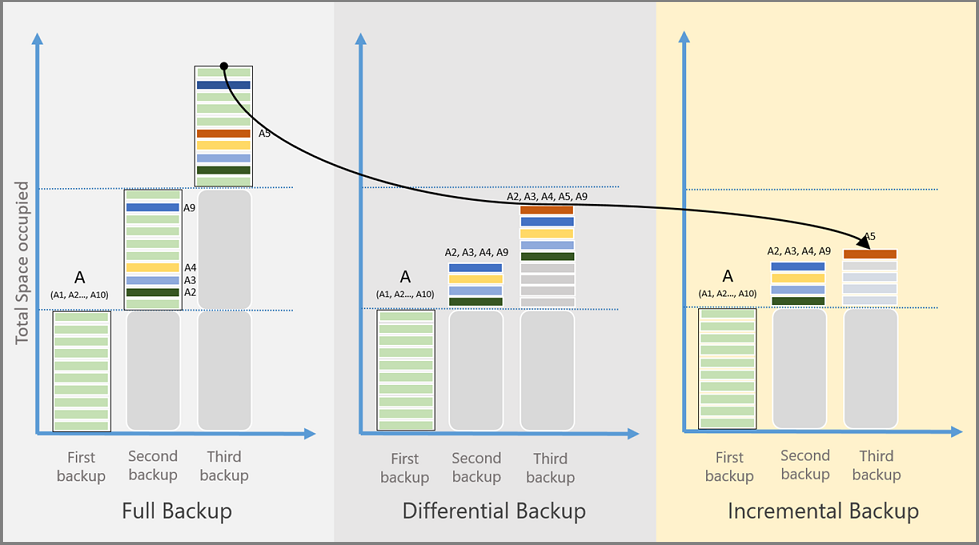
Diagrams courtesy of Microsoft Learn / Azure docs: backup/backup-architecture
Exam notes
- Policy = schedule + retention, applied to compatible protected resources through the supported vault model.
- A policy is only intent until jobs succeed and a restore has been tested.
Related
azure-backup · recovery-services-vault · azure-vm · Home
📘 Source: Microsoft Learn — Azure Backup architecture and components